
Last updated: July 4, 2026
Dog Pregnancy Calculator
If your dog just mated or you suspect she’s pregnant, you need real answers fast. How long is a dog pregnant? When will she give birth? How many puppies should you expect? This guide — paired with our free Dog Pregnancy Calculator — walks you through the entire journey, from mating to whelping to the first weeks of puppy care.
This calculator is built for three types of readers. First-time dog owners who think their pet might be pregnant. Serious hobby breeders tracking a planned litter. And veterinary students or new breeders who want the actual math behind due dates, not just a guess.
Dog pregnancy lasts about 63 days, but the exact number depends on when ovulation happened, not just when mating occurred. That single fact trips up more new breeders than anything else. This guide explains why, and gives you the tools to calculate it correctly.
How Long Are Dogs Pregnant? The Science of Canine Gestation
Canine gestation averages 63 days from ovulation. Most healthy pregnancies fall between 58 and 68 days.
Dog pregnancy happens in three distinct phases.
Phase 1: Fertilization and implantation (days 0–17). After mating, sperm can survive in the female’s reproductive tract for several days. Eggs mature over a 48–72 hour window before they’re ready for fertilization. Embryos don’t implant into the uterine wall until around day 17 to 21. Before implantation, there are usually no visible symptoms at all.
Phase 2: Organogenesis (days 18–35). This is when major organs and body structures form. A veterinarian can usually confirm pregnancy by abdominal palpation around day 28–30, and ultrasound can detect fetal heartbeats as early as day 25.
Phase 3: Fetal growth and labor prep (day 35 to whelping). Puppies gain most of their birth weight in these final four weeks. By day 45, an X-ray can count skeletons accurately because bones have calcified enough to show on film.
Why Your Dog’s Due Date Isn’t Just “Mating Date Plus 63 Days”
This is the single most common source of confusion for new breeders.
Dogs can mate multiple times over several days during a heat cycle, but fertilization only happens around ovulation. If you only know the mating date, your calculated due date could be off by up to a week in either direction.
That’s why progesterone testing matters so much for accuracy.
Myth vs. Fact: “Mating Date = Due Date” Myth: Count 63 days from the day your dog mated and that’s her due date. Fact: Gestation is measured from ovulation, not mating. A dog can mate several days before she actually ovulates, since sperm survives in the reproductive tract. If mating and ovulation happen on different days — which is common — a due date based purely on mating date can be off by 3 to 7 days. Progesterone testing pinpoints ovulation directly, which is why it produces a tighter, more reliable due-date window than mating-date math alone.
Dog Pregnancy Symptoms Week by Week
Symptoms build gradually and don’t become obvious until the second half of pregnancy.
| Week | What You Might Notice |
|---|---|
| Week 1–2 | No visible symptoms; possible mild lethargy |
| Week 3 | Slight appetite changes; mild vomiting is possible (“morning sickness” equivalent) |
| Week 4 | Nipples begin to enlarge and darken |
| Week 5 | Abdomen begins to visibly widen; weight gain starts |
| Week 6 | Appetite increases noticeably; nesting behavior may begin |
| Week 7 | Belly is clearly enlarged; puppies may be felt or seen moving |
| Week 8 | Nesting intensifies; milk may be expressed from nipples |
| Week 9 | Restlessness, panting, temperature drop, and labor onset |
If your dog isn’t showing any of these signs by week 5–6, it’s worth confirming the pregnancy with an ultrasound rather than assuming she’s simply an “early” case.
How to Use the Dog Pregnancy Calculator
The calculator works as a connected 12-part suite. Enter your data once in the early cards, and the later cards automatically fill in using that information.
Core Inputs
- Mating date(s): The date or date range your dog was bred.
- Ovulation date (optional but recommended): From a progesterone test, this is the most accurate starting point for your due date math.
- Breed and estimated adult weight: Used to flag size-related risk factors and calculate nutrition needs.
- Current weight and body condition: Feeds into the calorie calculator for pregnancy weight gain tracking.
- X-ray or ultrasound puppy count (if available): Feeds the litter-size and whelping-kit sizing tools.
Core Outputs
- Estimated due date range: Calculated as ovulation date + 63 days (or mating date + 63 days if ovulation date isn’t known), with a 58–68 day safety window.
- Current gestation week: Tells you which phase your dog is in right now.
- Daily calorie needs: Uses the Resting Energy Requirement (RER) formula — RER = 70 × (body weight in kg)^0.75 — multiplied by a pregnancy-stage factor that climbs from about 1.0x in early gestation to roughly 1.6x by week 9. This formula follows the maintenance-energy standard published in the National Research Council’s Nutrient Requirements of Dogs and Cats.
- Whelping countdown and temperature-drop alert: A healthy dog’s temperature typically drops to 99°F or below within 24 hours of labor starting.
- Risk flag: Highlights factors like brachycephalic breed, advanced dam age, or a single detected puppy (singleton pregnancy).
Assumptions and Limitations
The calculator is an estimation tool, not a diagnostic device. Here’s what to keep in mind:
- Due-date ranges assume a healthy, average pregnancy — individual dogs vary.
- Calorie multipliers are general guidelines; your vet may adjust them based on body condition score.
- The temperature-drop trigger is a strong labor indicator but not guaranteed in every dog.
- This tool cannot replace an in-person veterinary exam, ultrasound, or X-ray.
Always confirm any pregnancy and due date estimate with a licensed veterinarian.
How Many Puppies Will My Dog Have? (And How to Size Your Whelping Kit)
Litter size depends heavily on breed and whether this is a first litter. Once you know your expected count, you can size your whelping supplies correctly instead of guessing.
| Breed Size | First-Litter Size | Later-Litter Size | Recommended Whelping Box Size | Whelping Pad Quantity |
|---|---|---|---|---|
| Toy/Small (under 20 lbs) | 2–4 puppies | 3–5 puppies | 24″ x 24″ | 6–8 pads |
| Medium (20–50 lbs) | 4–6 puppies | 5–8 puppies | 36″ x 36″ | 8–10 pads |
| Large (50–90 lbs) | 6–8 puppies | 7–10 puppies | 48″ x 48″ | 10–14 pads |
| Giant (90+ lbs) | 6–10 puppies | 8–12 puppies | 48″ x 60″ | 12–16 pads |
First litters tend to run smaller than later litters, since the dam’s reproductive system is still maturing. An X-ray after day 45 is the most reliable way to get an actual puppy count, since it lets a vet count skeletons directly rather than estimate from palpation.
Is My Dog’s Pregnancy High-Risk?
Certain factors raise the odds of complications during pregnancy or labor. Knowing them ahead of time lets you plan for a vet-attended whelping instead of being caught off guard.
Brachycephalic breeds (French Bulldogs, Bulldogs, Pugs, Boston Terriers) have narrow hips and large puppy head sizes relative to the birth canal. Many need a scheduled C-section rather than natural delivery.
Singleton pregnancies (only one puppy detected) carry risk because a single large puppy can grow too big for natural delivery, and a litter of one doesn’t always trigger the hormonal signals that start labor on schedule.
Advanced dam age (over 6–7 years for most breeds) is linked to higher rates of complications and smaller litters.
Giant breeds face their own labor risks simply due to puppy size and litter volume.
If your dog falls into any of these categories, tell your vet early and ask about a planned delivery date rather than waiting for natural labor to start.
Pre-Breeding Health Screening Checklist
Responsible breeding starts before mating, not after. Serious breeders should complete these steps before Card 1 of the calculator ever comes into play:
- Brucellosis testing for both the dam and sire — this bacterial infection causes infertility and pregnancy loss and is transmissible between dogs.
- Hip and eye certifications (such as OFA or CERF screenings) to rule out heritable conditions before passing them to a litter.
- Genetic panel testing for breed-specific inherited disorders.
- A general breeding-soundness exam confirming both dogs are healthy enough to breed and whelp safely.
Skipping this step is one of the most common and costly mistakes new breeders make — health problems caught after the fact are far more expensive than screening beforehand.
Stud Dog Factors: The Male Side of the Equation
Most pregnancy content focuses entirely on the female dog, but the sire matters just as much.
Fertility issues in male dogs can include low sperm count, poor sperm motility, or age-related decline in fertility after about 7–8 years. A stud dog should also be screened for the same brucellosis and genetic conditions as the dam.
Timing matters on the stud side too — sperm can survive for several days in the female’s tract, which is part of why pinpointing ovulation (rather than just the mating date) produces a more accurate due date.
Progesterone Testing vs. Ultrasound vs. X-ray vs. Palpation: Which Test Is Right for You?
Each diagnostic method answers a different question at a different stage of pregnancy.
| Method | Best Used | What It Tells You | Typical Timing |
|---|---|---|---|
| Progesterone blood test | Before/at ovulation | Pinpoints ovulation for accurate due-date math (LH surge ~2.0 ng/mL 48h before ovulation, rising to ≥5.0 ng/mL at ovulation) | Around the heat cycle, before or during mating window |
| Abdominal palpation | Early confirmation | Confirms pregnancy exists | Day 28–30 |
| Ultrasound | Early-to-mid confirmation | Confirms pregnancy, detects heartbeats, checks fetal viability | Day 25 onward |
| X-ray | Late-stage counting | Accurate puppy count via skeleton calcification | Day 45 onward |
What Does a Dog Pregnancy Ultrasound Actually Show?
If you’ve never seen one before, a canine pregnancy ultrasound can look confusing on screen. Here’s what a vet is actually looking at:
- Around day 25, you’ll see small, dark, fluid-filled circles in the uterus — these are the gestational sacs.
- By day 28–30, a flickering pixel inside each sac is the fetal heartbeat, which a vet will point out and often count out loud.
- By day 35–40, you can start to make out curled fetal shapes with visible spine curvature.
- Ultrasound is better for confirming pregnancy and fetal viability (are the heartbeats still there) than for getting an exact puppy count — for that, wait for the day-45 X-ray.
Don’t worry if the screen looks like abstract shapes at first. Ask your vet to point out the heartbeat flicker — it’s the easiest landmark for a first-time viewer to spot.
Failed Pregnancy, Resorption, False Pregnancy, and Pyometra
Not every suspected pregnancy ends in a litter, and it’s important to understand the difference between the possibilities.
Silent resorption happens when the body reabsorbs one or more embryos or fetuses early in gestation, often without visible symptoms. A dog that seemed pregnant at day 25 might show no fetuses at day 45.
Pseudocyesis (false pregnancy) occurs when a dog shows pregnancy-like symptoms — nesting, mammary development, even mothering behavior toward toys — without actually being pregnant. It’s a hormonal response, not a medical emergency, but it should be confirmed with a vet visit.
Pyometra is a serious uterine infection that can occur in unspayed female dogs, typically a few weeks after a heat cycle, whether or not she was bred. It’s not a pregnancy complication itself, but its early symptoms — lethargy, abdominal swelling, reduced appetite — can be mistaken for early pregnancy signs by an inexperienced owner. Unlike a normal pregnancy, pyometra usually comes with fever, vomiting, or vaginal discharge, and it’s a veterinary emergency that requires prompt treatment, often surgery.
If your dog’s symptoms seem to disappear, never quite match her calculated week, or come with fever or discharge, don’t assume the worst on your own — schedule a vet visit to confirm exactly what’s happening.
What Does a Litter Actually Cost?
Breeding a litter is a financial commitment, not just a biological one. Costs vary widely by breed size and whether complications arise.
| Cost Category | Typical Range |
|---|---|
| Stud fee | $500–$3,000+ (varies heavily by breed popularity) |
| Pre-breeding health screening | $200–$600 |
| Progesterone testing (per draw, multiple draws needed) | $50–$100 per draw |
| Confirmation ultrasound | $75–$200 |
| Day-45 X-ray | $150–$350 |
| Whelping kit and supplies | $100–$300 |
| Emergency C-section reserve | $1,500–$5,000 |
| Puppy vaccinations, deworming, microchipping | $200–$500+ |
| Litter registration paperwork | $25–$75 |
A straightforward, uncomplicated litter for a medium-breed dog might run $1,500–$2,500 total. A brachycephalic breed requiring a planned C-section can easily exceed $5,000 once emergency reserves are factored in.
Pro tip: Set aside a dedicated emergency fund or consider pet insurance before breeding, especially for high-risk breeds. The single biggest unexpected cost new breeders face is an emergency C-section they didn’t budget for.
Whelping Kit Checklist and Signs of Labor
Prepare your whelping area at least one to two weeks before the due date, not the week of. For a full supply-by-supply breakdown and sizing chart, see our Whelping Box Buying Guide.
Whelping kit essentials:
- Whelping box sized for your breed and expected litter count (see the sizing table above)
- Clean towels and heating pad (set to low, with an escape area)
- Digital thermometer for temperature tracking
- Sterile scissors and unwaxed dental floss (for cord tying, in case of emergency)
- A vet’s emergency contact number, saved and visible
Signs labor is approaching:
- Body temperature drops to 99°F or below, typically 12–24 hours before labor
- Restlessness, nesting behavior, and loss of appetite
- Panting and pacing as contractions begin
Contact your vet immediately if more than 2–4 hours pass between puppies with visible straining and no delivery, or if you see green/dark discharge before the first puppy arrives.
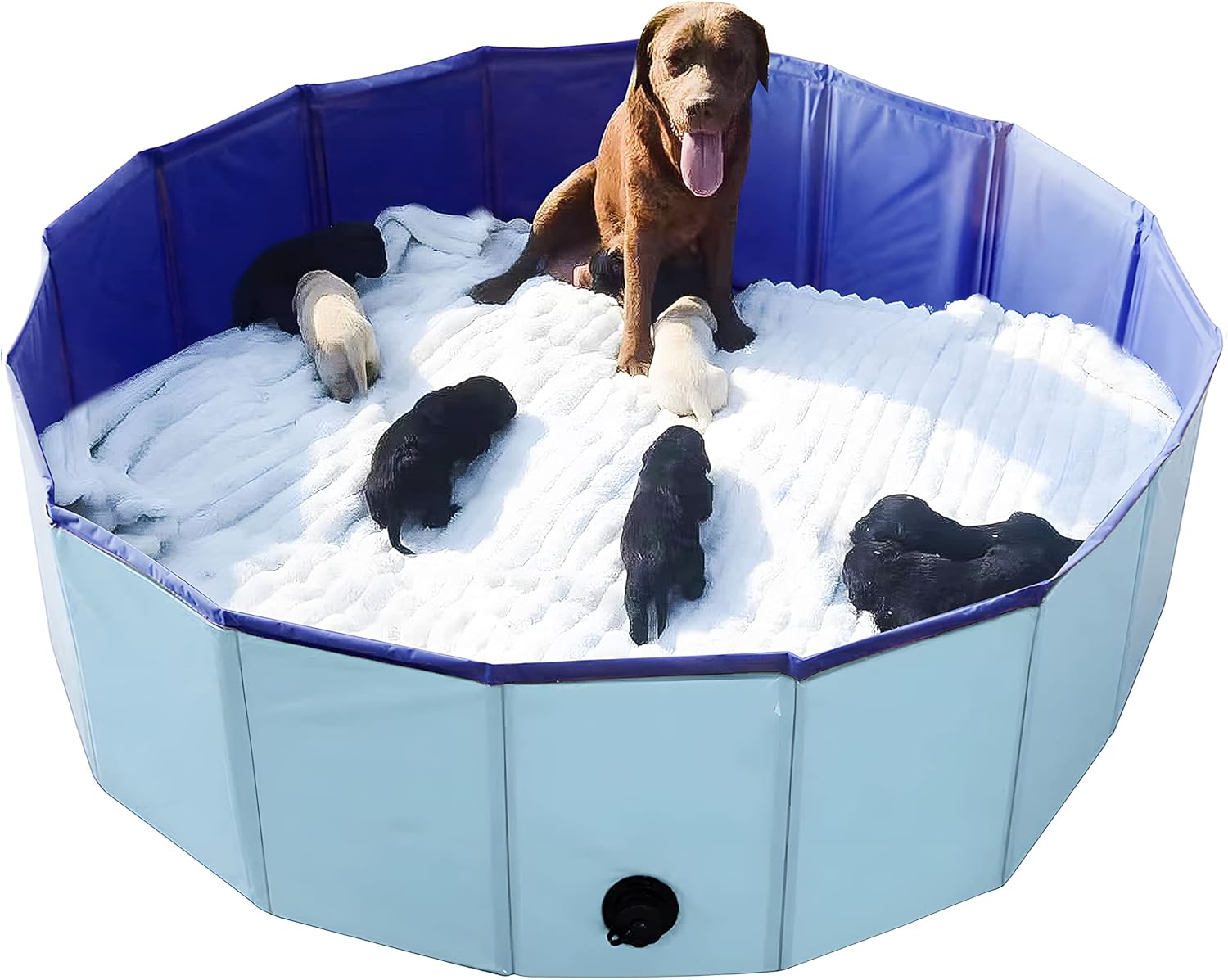
Artilife Whelping Box for Dogs
Whelping Pen for Dogs & Puppies — Easy to Clean, 47" Dia. x 12" H (120x30cm), Blue
Legal and Ethical Breeding Considerations
Before breeding, consider whether it’s the right decision — not just whether it’s possible.
- Litter registration with organizations like the AKC or UKC requires specific paperwork and timelines; start this process before the litter arrives, not after.
- Ethical breeding standards generally discourage breeding dogs with known heritable health issues, dogs under proper breeding age, or dogs bred back-to-back without recovery time between litters.
- When not to breed: if either dog fails health screening, if the dam is past recommended breeding age for her breed, or if you can’t financially cover an emergency C-section.
Responsible breeding protects the dam, the puppies, and the breed’s long-term health.
Common Mistakes New Breeders Make
- Testing too early. Progesterone results before the LH surge can be misleading if drawn too soon.
- Introducing the whelping box too late. Dogs need time to get comfortable with the space before labor starts.
- Ignoring stud-side fertility. A failed breeding attempt isn’t always the dam’s fault.
- Skipping pre-breeding health screening to save money upfront, only to face larger costs later.
- Underestimating nutrition needs. Pregnant and nursing dogs need significantly more calories than their normal maintenance diet.
Real-World Case Studies
Case Study 1: Golden Retriever, Planned Litter. Mating occurred March 1. Ovulation was confirmed via progesterone test on March 3. Using ovulation date + 63 days, the calculated due date was May 5, with a safe window of April 30–May 10. The dam whelped naturally on May 3 — within the expected range and consistent with the ovulation-based estimate.
Case Study 2: French Bulldog, High-Risk Delivery. Given the breed’s brachycephalic risk profile, progesterone testing pinpointed ovulation around May 12. The calculated due date was July 14. Because French Bulldogs frequently require C-sections due to narrow hips and large puppy head size, the owner scheduled a planned C-section with their vet ahead of the due date rather than waiting for natural labor — avoiding an emergency situation.
Postpartum: Colostrum, Nutrition, and Puppy Milestones
The first 72 hours after whelping matter as much as the pregnancy itself.
Colostrum, the thick first milk the dam produces in the first 24–48 hours, contains critical maternal antibodies puppies cannot get any other way. Every puppy should nurse within the first two hours of birth to receive it — puppies that miss this window have a much higher risk of early illness.
Once puppies arrive, the dam’s nutritional needs peak. Lactation can require up to 2–4 times her normal maintenance calories depending on litter size, which is why the calculator’s DER (Daily Energy Requirement) multiplier climbs sharply after whelping. Many vets recommend transitioning a nursing dam to a large-breed puppy formula or a performance-level diet during this window, since standard adult maintenance food doesn’t provide enough calorie density; some breeders also incorporate raw-fed supplementation under veterinary guidance, though this should always be discussed with your vet first given the higher risk of nutrient imbalance during lactation.
For a full breakdown of exactly how many calories your nursing dog needs by week and litter size, use our Dog Food Calculator, which is built to work directly alongside this pregnancy tool.
Puppies typically open their eyes around day 10–14, start walking around day 21, and begin weaning around week 3–4. Most puppies are ready for their first round of vaccinations and deworming around week 6–8 — see our Puppy Vaccination Schedule for the full timeline. Most puppies are ready to go to new homes at 8 weeks old, once they’re vaccinated, dewormed, and eating solid food independently.
Spay/Neuter Timing After a Litter
Most vets recommend waiting until the dam has fully weaned her puppies — generally 6–8 weeks post-whelping — before scheduling a spay, to allow her hormone levels and mammary tissue to return to normal first. Spaying too early, while she’s still lactating, can complicate milk production for the current litter and is generally avoided unless there’s a medical reason to intervene sooner. Always confirm timing with your vet based on her individual recovery.
If you’re also tracking a related species, our Cat Pregnancy Calculator uses the same due-date logic adapted for feline gestation timelines. Breed-specific risk guides — for French Bulldogs, Boston Terriers, Pugs, and other high-risk breeds — are also available through our breed pregnancy and whelping guides.
Frequently Asked Questions
How long are dogs pregnant?
Dog pregnancy averages 63 days from ovulation, with a normal range of 58 to 68 days.
Why is my dog’s due date different from her mating date?
Because gestation is measured from ovulation, not mating. Sperm can survive several days in the female’s reproductive tract, so mating and ovulation don’t always happen on the same day.
Can a dog give birth on day 58?
Yes. Day 58 falls within the normal 58–68 day gestation window and isn’t considered premature on its own, though any early labor should be monitored closely by a vet.
How many puppies will my dog have on her first litter?
First litters tend to be smaller than later litters — often 2–4 puppies for small breeds and 6–8 for large breeds. An X-ray after day 45 gives the most accurate count.
How often should I take my dog’s temperature before labor?
Start checking twice daily once you’re within a week of the due date. Increase to every few hours once her temperature drops toward 99°F, since labor usually follows within 24 hours.
Is my dog’s pregnancy high-risk?
Risk factors include brachycephalic breeds, singleton litters, advanced dam age, and giant breed size. If any apply, discuss a planned delivery with your vet.
How much extra food does a pregnant dog need?
Calorie needs rise gradually, from close to normal maintenance in early pregnancy to roughly 1.5–1.6 times maintenance by week 9, and even higher during lactation.
When can puppies go to new homes?
Most puppies are ready at 8 weeks old, after weaning, initial vaccinations, and deworming are complete.
Do I need pet insurance for a pregnant dog?
It’s not required, but it’s strongly recommended for high-risk breeds, since emergency C-sections can cost $1,500–$5,000 without warning.
Is breeding dogs profitable?
Rarely, once health screening, vet visits, whelping supplies, and emergency reserves are factored in. Most responsible breeders describe it as a break-even or modest-cost hobby rather than a profit venture.
What is pyometra, and is it related to pregnancy?
Pyometra is a uterine infection in unspayed dogs, not a pregnancy complication — but its early symptoms can resemble early pregnancy. It’s a veterinary emergency requiring prompt treatment.
When should I spay my dog after her litter?
Most vets recommend waiting 6–8 weeks after whelping, once puppies are fully weaned, before scheduling a spay.
Conclusion
Dog pregnancy is a 63-day journey with real, calculable milestones — but the details matter. Knowing your dog’s actual ovulation date, not just her mating date, is the single biggest factor in getting an accurate due date. Understanding litter-size expectations, risk factors, true costs, and what happens in the critical first 72 hours after whelping helps you prepare instead of react.
Use the Dog Pregnancy Calculator to track your dog’s due date, calorie needs, and whelping countdown in one place — then lean on this guide whenever you need the reasoning behind the numbers. Whether you’re a first-time owner or an experienced breeder, the right information at the right week makes all the difference for a healthy, well-prepared delivery.
Card 1 of 12 · Anchor Calculator
Dog Pregnancy Due Date Calculator
Enter your dog's last mating date to get an estimated whelping due date, a due-date range, and a live gestation-day countdown using the standard 63-day canine model.
- Estimated Due DateThe single best-estimate whelping date, calculated as 63 days after the last mating. Most healthy litters arrive within a few days of this figure.
- Due Date RangeA wider 58–68 day window since sperm can survive several days before ovulation actually occurs. Ovulation testing (Card 2) narrows this considerably.
- Current Gestation Day & WeekShows how many days have passed since mating and which of the nine gestation weeks your dog is currently in. This feeds directly into every other card below.
- Gestation StageFlags whether the pregnancy is in its early, middle, or late phase, which determines feeding, monitoring, and preparation priorities going forward.

Boncare 10 Seconds Oral Thermometer for Adults and Kids
Accurate & Safe Rectal Thermometer for Baby with Fever Alarm, Digital Thermometer (Light Blue)
Buy on Amazon →Card 2 of 12 · Precision Tool
Ovulation-Based Breeding Date Calculator
If your vet ran progesterone testing, use the confirmed ovulation date (or a progesterone reading) to narrow the due-date estimate to roughly ±1 day.
- Precise Due DateCalculated as 63 days from confirmed ovulation, this overrides Card 1's wider mating-date estimate whenever ovulation timing is known.
- Fertile Breeding WindowRuns from 2 to 5 days after ovulation, the period when eggs are viable and fertilization is most likely to succeed.
- Confidence LevelReflects whether the due date rests on confirmed ovulation timing (high confidence) or an estimated mating date alone (lower confidence).
Card 3 of 12 · Reference Tool
Gestation Length & Timeline Reference
See exactly what's happening inside your dog right now, mapped onto the three clinical phases of the 63-day gestation period.
- Fertilization & Implantation (Day 0–17)Fertilized eggs travel to the uterus and implant in the uterine wall. Nothing is visible on ultrasound yet during the earliest days of this window.
- Embryonic Development (Day 18–34)Organogenesis occurs rapidly and heartbeats become detectable by ultrasound around day 21–24 of this phase.
- Fetal Development (Day 35–63)Skeletons calcify around day 45, fur begins growing, and the dam's body visibly prepares for labor as this final phase progresses.
Card 4 of 12 · Visual Tracker
Week-by-Week Pregnancy Development Tracker
Fetal development milestones and expected changes in the dam for the current gestation week, with a growth curve and weight-gain overlay.
- Week MilestoneDescribes the primary developmental event happening this week, from implantation through final positioning before labor.
- Weight Gain To DateAn estimated share of the dam's total expected pregnancy weight gain, scaled to how far along the current week is.
Card 5 of 12 · Confirmation Tool
Pregnancy Confirmation & Test Timing Calculator
Maps each confirmation method to the earliest date it becomes reliable, so you know exactly when to book the vet visit.
- Earliest Reliable Test DateThe first day your chosen method typically produces a trustworthy result. Testing earlier risks a false negative purely from timing.
- Recommended WindowThe full span during which this method remains diagnostically useful, giving flexibility for scheduling a vet appointment.
Card 6 of 12 · Planning Tool
Pregnancy Calendar & Reminder Export
Turns the due date into a full calendar of key checkups and milestones, ready to export and follow week by week.
| Day | Date | Event |
|---|
- Full Pregnancy CalendarEvery key date — confirmation checkup through whelping day — laid out in one downloadable file you can add to any calendar app.
- Live Countdown ListEach row updates automatically from your due date, so the same calendar stays accurate even if the due date estimate changes later.
Card 7 of 12 · Reference Ranges
Litter Size Estimator
A non-diagnostic reference for typical breed-size litter ranges, to set expectations only. An actual count needs an X-ray after day 45 — see Card 5.
- Typical Litter Size RangeA breeder-reference range based on adult breed size, not a clinical prediction for this specific pregnancy.
Card 8 of 12 · Nutrition Bridge
Pregnancy Weight Gain & Nutrition Calculator
Calculates the calorie increase needed as pregnancy progresses. No increase is needed until the final third of gestation — a common owner misconception.
- Adjusted DERYour dog's current calorie target, scaled by the pregnancy-week multiplier. It stays at maintenance level until week 6.
- Expected Total Weight GainTypically 15–25% of pre-breeding body weight by whelping, most of it added during the final three weeks.
- Feeding FrequencyShifts toward smaller, more frequent meals as the growing litter reduces available abdominal space late in pregnancy.
Card 9 of 12 · Final Approach
Whelping Countdown & Labor Signs Calculator
Converts your due date into a day-by-day countdown and flags the classic pre-labor temperature drop so you know when labor is imminent.
- Nesting behavior — seeking out a quiet, enclosed space
- Restlessness and pacing
- Appetite loss in the final 24 hours
- Panting and visible discomfort
- Days Until Due DateA live countdown from today to your calculated due date, recalculated automatically whenever the page is revisited.
- Labor-Imminent AlertTriggers when logged temperature drops to 99°F (37.2°C) or below, which typically precedes labor by 12–24 hours.
Card 10 of 12 · Preparation Tool
Whelping Kit & Prep Checklist Calculator
Turns your due date and expected litter size into a personalized, countdown-gated supply and preparation checklist.
| Item | Quantity |
|---|
- Kit-Ready DeadlineSet 14 days before your due date, giving a safety buffer in case whelping arrives early.
- Towels RecommendedTwo per expected puppy — one to dry each newborn plus spares for cleanup during delivery.
Card 11 of 12 · Risk Reference
Breed-Specific Gestation & Risk Calculator
Surfaces breed-specific whelping risk factors without altering the universal 63-day gestation math, which stays the same for every breed.
- Breed Risk CategoryReflects known whelping risk factors for this breed and litter size combination, most notably brachycephalic head shape and very small litters in giant breeds.
- Recommended Vet MonitoringHow closely a veterinarian should track this pregnancy in its final weeks, scaled to the calculated risk category.
Card 12 of 12 · Loop-Closing
Post-Whelping & Puppy Milestone Calculator
Once whelping is complete, this converts the actual whelping date into a puppy developmental timeline and a postpartum nutrition note for the dam.
| Milestone | Date |
|---|
- Lactation DER MultiplierScales from 2.0x to 4.0x maintenance calories depending on litter size, peaking around week 3–4 of nursing when milk demand is highest.
This calculator is for informational purposes only and does not constitute professional advice. Consult a licensed advisor before making decisions.