
Last updated: Oct 27, 2026
AC Tonnage Calculator
| Floor area | BTU/h | Tons |
|---|---|---|
| 600 sq ft | 12,000 - 15,000 | 1.00 - 1.25 |
| 1,000 sq ft | 20,000 - 25,000 | 1.67 - 2.08 |
| 1,500 sq ft | 30,000 - 37,500 | 2.50 - 3.13 |
| 2,000 sq ft | 40,000 - 50,000 | 3.33 - 4.17 |
| 2,500 sq ft | 50,000 - 62,500 | 4.17 - 5.21 |
| Tons | BTU/h | kW | kcal/h |
|---|---|---|---|
| 0.75 | 9,000 | 2.64 | 2,268 |
| 1 | 12,000 | 3.52 | 3,024 |
| 1.5 | 18,000 | 5.28 | 4,536 |
| 2 | 24,000 | 7.03 | 6,048 |
| 3 | 36,000 | 10.55 | 9,072 |
| 5 | 60,000 | 17.58 | 15,120 |
AC Tonnage Calculator: How Many Tons of Air Conditioner Do You Need?
An AC (air conditioner) tonnage calculator turns your room size and heat load into a cooling size. This guide explains how to use the AC tonnage calculator on this page, how to read the result, and how to avoid buying a unit that is too big or too small.
One ton of air conditioner capacity equals 12,000 BTU/h, 3.517 kW of cooling and 3,024 kcal/h. For a whole US home, the common rule is 20 to 25 BTU/h per square foot, which is about one ton per 450 to 600 square feet. A single hot-climate room needs far more per square foot, about one ton per 80 to 180 square feet.
What Is AC Tonnage?
AC tonnage is the cooling capacity of an air conditioner, measured in tons of refrigeration (TR). A ton does not measure weight. It comes from the heat needed to melt one ton of ice in 24 hours, which is 288,000 BTU per day, or 12,000 BTU per hour.
A BTU is a British thermal unit, the heat needed to raise one pound of water by one degree Fahrenheit. BTU/h means BTU per hour, a rate. Many guides write “BTU” when they mean BTU/h, so always check the unit.
Cooling load is the amount of heat the unit must remove each hour. Tonnage is that load divided by 12,000. A cooling capacity calculator therefore answers one question: how much heat enters this space, and which standard unit removes it?
Ton, horsepower and kilowatts are different measures. A ton is cooling output. Horsepower describes compressor power, and one ton is about 4.7 thermal HP. Cooling kW is heat removed, not electricity used. The glossary defines each term.
How to Use the AC Tonnage Calculator
To size an air conditioner, choose a method and a city, then enter floor area, ceiling height, insulation, sun, floor level and people. Add windows and appliance watts for a more detailed result.
- Choose a method. Use the whole-home method for a house. Use the single-room method for one hot-climate room. The single-room method multiplies the base load by 3.6.
- Enter floor area. Not sure of the area? Use the square footage calculator. If your plan is in square metres, the area converter handles the change (1 sq m = 10.764 sq ft).
- Enter ceiling height. Measured in metres? Convert it with the feet to meters converter. Valid range is 7 to 20 ft.
- Set insulation, sun and floor level. These multiply the load.
- Add windows and appliances. Enter glass area, direction, glazing type and appliance watts.
- Press Calculate. Read tons, BTU/h and kW, then take the recommended standard size.
Input limits are floor area 20 to 10,000 sq ft, occupants 1 to 30, appliances 0 to 5,000 W and windows 0 to 200 sq ft.
The Formula Behind the HVAC Tonnage Calculator
This HVAC tonnage calculator estimates cooling load for homes and small rooms. It adds heat from four sources: the building shell (envelope), windows, people and appliances.
Envelope (BTU/h) = A * B * Hf * Fi * Fs * Ff
Windows (BTU/h) = G * D * Q
People (BTU/h) = max(0, N – 2) * 400
Appliances (BTU/h) = W * 3.412
Total (BTU/h) = Envelope + Windows + People + Appliances
Tons = Total / 12,000
Cooling kW = Total * 0.000293071
In plain terms: A is floor area in sq ft. B is base BTU/h per sq ft for the city. Hf is ceiling height divided by 8, limited to 0.85 to 1.60. Fi is the insulation factor, Fs the sun factor and Ff the floor factor. G is glass area, D is the direction value and Q is the glazing factor. N is people and W is appliance watts. The recommended size is the smallest standard size at or above the result.
The constants 12,000, 3.412 BTU/h per watt and 0.000293071 kW per BTU/h are standard conversions. Everything else is a model assumption, not measured design data.
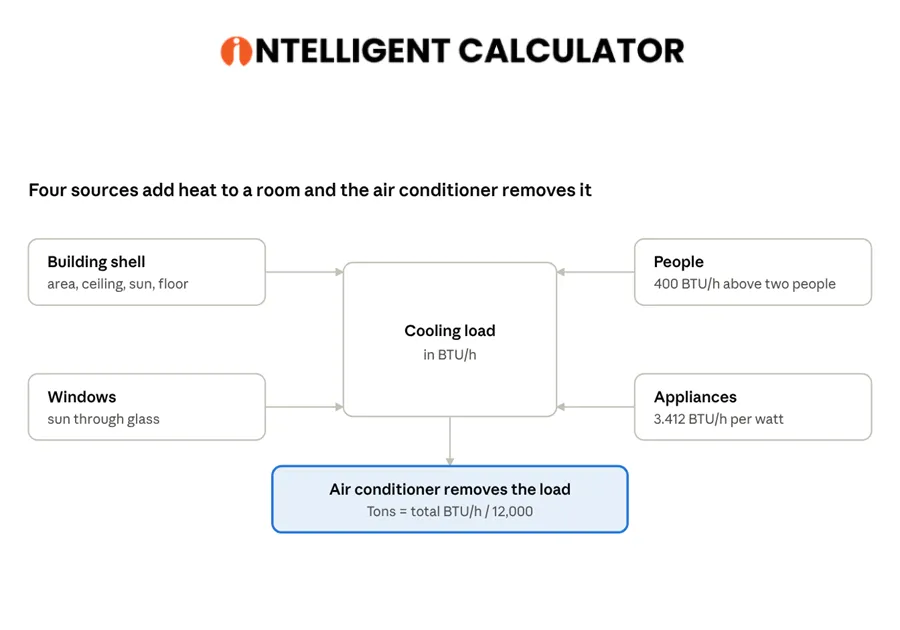
Image 1 · heat-flow drawing · four heat terms and the unit
| Factor | Model value in this calculator |
| Insulation | Good 0.90, average 1.00, poor 1.15 |
| Sun exposure | Shaded 0.92, average 1.00, full sun 1.08 |
| Floor level | Ground 1.00, middle 1.03, top 1.12 |
| Glass direction (BTU/h per sq ft) | North 25, east 55, south 40, west 75 |
| Glazing | Single 1.00, double 0.75, low-E 0.60 |
In this calculator, good insulation multiplies the load by 0.90 and poor insulation by 1.15. Low-E glass multiplies window heat by 0.60. These are model values, not universal facts.
AC Tonnage per Square Foot: Chart and Rules of Thumb
The AC tonnage per square foot rule is the fastest estimate. Multiply floor area by 20 to 25 BTU/h, then divide by 12,000. A 1,000 sq ft home needs 20,000 to 25,000 BTU/h, which is 1.67 to 2.08 tons.
The headline rule sits below some of the calculator’s city values. Hot US cities use higher bases: Dallas 26, Houston 27 and Miami 28 BTU/h per sq ft. Mild cities sit lower: London 14 and Atlanta 23. Hot-dry and Gulf cities are highest: Delhi 30, and Dubai, Riyadh and Multan 32.
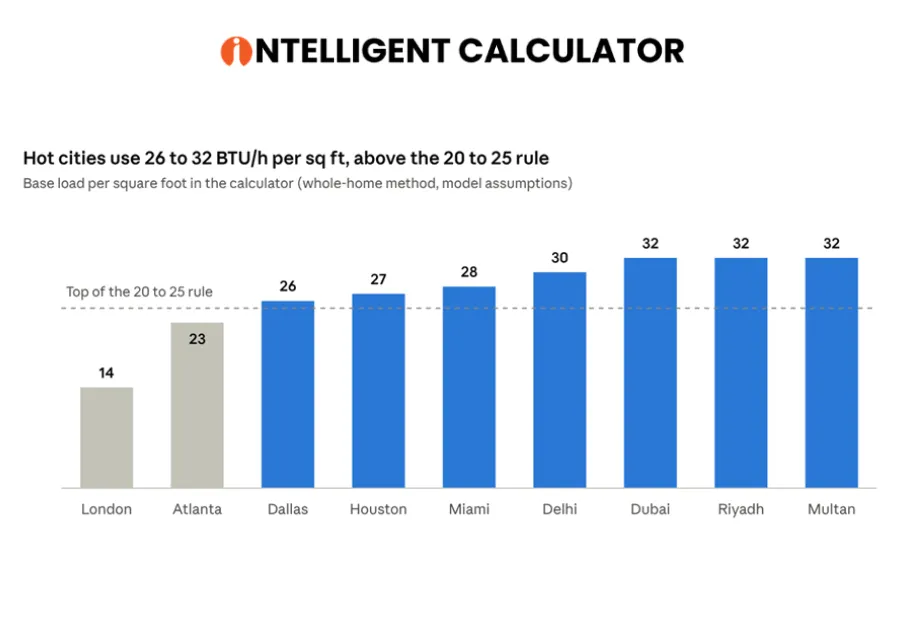
Image 2 · stats graph · calculator base values, 9 sample cities
Why do published numbers disagree? Because guides mix three things: whole homes versus single rooms, mild versus hot climates, and rule of thumb versus load calculation. Whole US homes average the load across many rooms. A single sunny room peaks alone. That is why the same guide set shows 450 to 600 sq ft per ton for houses and 80 to 180 for hot rooms.
Worked Examples: Eight Test Cases
We ran the calculator for each case below on 25 October 2026. They are reproduced from the calculator, not an independent third-party check.
| ID | Inputs | Total BTU/h | Tons | Size |
| T1 | Dallas, whole home, 1,200 sq ft, 8 ft, average, ground, 4 people | 32,000 | 2.67 | 3 ton |
| T2 | Delhi, single room, 144 sq ft, top floor, 2 people | 17,418 | 1.45 | 1.5 ton |
| T3 | Delhi, single room, 144 sq ft, ground floor, 2 people | 15,552 | 1.30 | 1.5 ton |
| T4 | Houston, 1,800 sq ft, 9 ft, poor insulation, full sun, 5 people, 800 W, 90 sq ft west single glass | 78,586 | 6.55 | 7.5 ton |
| T5 | T4 with good insulation, shade and low-E glass | 53,251 | 4.44 | 5 ton |
| T6 | Atlanta, whole home, 1,000 sq ft, 3 people | 23,400 | 1.95 | 2 ton |
| T7 | Delhi, single room, 250 sq ft, ground floor, 2 people | 27,000 | 2.25 | 2.5 ton |
| T8 | Dallas, whole home, 100 sq ft, 1 person | 2,600 | 0.22 | 0.5 ton |
In short: a hot-climate top-floor room of 144 sq ft needs about 1.5 ton, while a 1,200 sq ft Dallas home needs 3 ton.
T1 shows the arithmetic: 1,200 x 26 = 31,200 BTU/h, plus 800 BTU/h for two people above the first two, gives 32,000 BTU/h, or 2.67 tons. Rounding up gives 3 ton.
T2 and T3 show floor level at work. The same Delhi room needs 1.30 tons on the ground floor and 1.45 on the top floor, because a roof overhead adds 12%.
T4 and T5 show the value of upgrades. Better insulation, shade and low-E glass cut the Houston home from 6.55 to 4.44 tons, a saving of 2.11 tons. At 78,586 BTU/h, the building shell supplies 67,906.
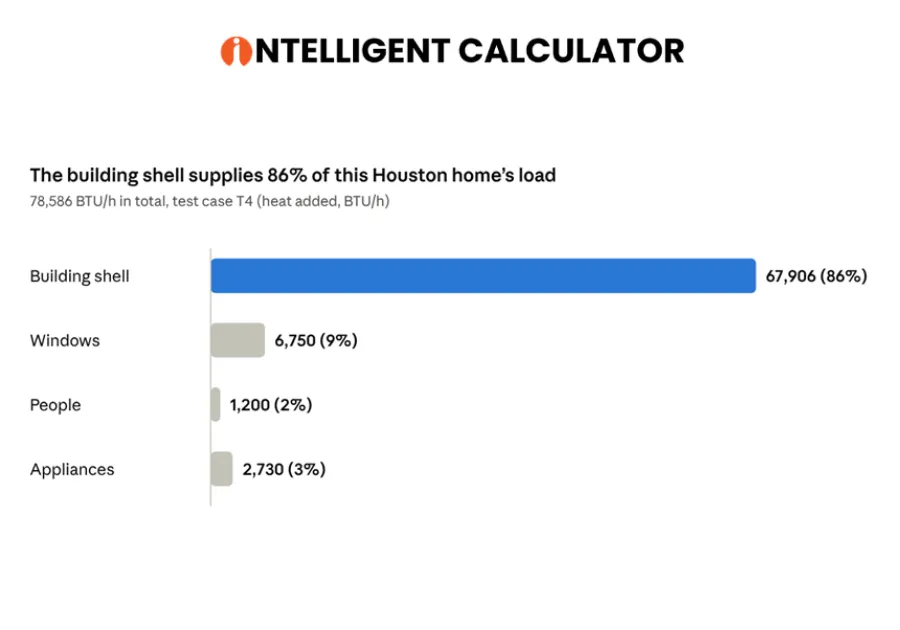
Image 3 · stats graph · Houston test case T4, run on 25 October 2026
T8 is a known limit. The whole-home method under-sizes tiny rooms. For 100 to 150 sq ft, ENERGY STAR’s room chart lists 5,000 BTU/h, so use the single-room method for small spaces.
1 Ton vs 1.5 Ton vs 2 Ton AC: Which Room Size Fits?
1.5 ton AC for how many square feet? In a hot climate, about 120 to 180 sq ft of top-floor or sunny room. The table below assumes a hot climate and two people.
| Size | BTU/h | Cooling kW | kcal/h | Typical hot-room fit |
| 1 ton | 12,000 | 3.52 | 3,024 | Up to about 120 sq ft |
| 1.5 ton | 18,000 | 5.28 | 4,536 | About 120 to 180 sq ft |
| 2 ton | 24,000 | 7.03 | 6,048 | About 180 to 250 sq ft |
A 1 ton unit suits a small shaded bedroom in a mild city. A 1.5 ton unit suits the 12 x 12 Delhi room in T2. A 2 ton unit or more suits large rooms, open plans, west glass, kitchens and four or more people. In a 250 sq ft hot room, 1.5 ton runs nonstop: T7 needs 2.25 tons.
Above 2.5 to 3 tons for a whole home, ask for a professional Manual J calculation.
What Changes Your Air Conditioner Size
Ceiling height. Does ceiling height change AC size? Yes. Load scales with height divided by 8 ft, so a 10 ft ceiling adds 25%. In a Miami example, 3.57 tons at 8 ft rises to 4.44 tons at 10 ft.
Windows. West glass adds about three times the heat of north glass in this model: 75 versus 25 BTU/h per sq ft of glass.
People and appliances. Each person above two adds 400 BTU/h in this model. ENERGY STAR advises adding 600 BTU/h per extra person for room units. Appliances convert at 3.412 BTU/h per watt. A server closet with 5 kW of equipment adds 17,060 BTU/h alone, which is about 1.42 tons.
Climate and humidity. Humid air carries latent heat, the energy used to condense moisture. A unit must remove both sensible heat (temperature) and latent heat (humidity). Check local humidity with the dew point calculator and the heat index calculator. In a CFM check on this page, sensible heat is about 72% of the total.
Airflow. Sensible cooling is roughly 1.08 x CFM x temperature drop. CFM means cubic feet per minute. Cross-check your duct airflow with the CFM calculator.
Oversized vs Undersized AC: Why Bigger Is Not Better
An oversized unit cools quickly, switches off early and removes less moisture. ENERGY STAR says an oversized unit is less effective and wastes energy. An undersized unit runs nonstop and may never reach the set temperature.
In the calculator’s short-cycling model, a 5 ton unit on a 2.5 ton need starts 8 times an hour and runs only 2.3 minutes per cycle. That leaves a room cold but clammy. Avoid the “bigger to be safe” instinct.
What to Do When Your Result Falls Between Two Sizes
If the result sits within about 15% under a standard size, take that size. If it falls just over, ask three questions:
- Is the climate humid? If yes, avoid oversizing.
- Is the room sunny or on a top floor? If yes, round up.
- Is the unit inverter or fixed-speed? Inverters modulate the compressor, so they tolerate small oversizing better. This is a general principle, not a guarantee.
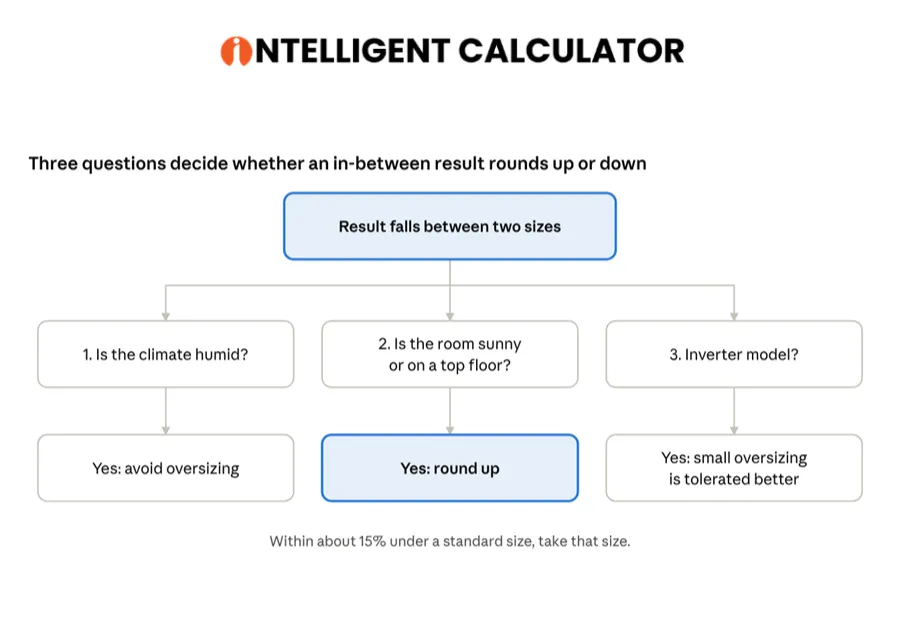
Image 4 · decision drawing · between two sizes
Is Your Contractor’s Quote Too Big?
Run the calculator with your real inputs and compare it with the quote. If the quote is more than 20% above or below the result, ask for the Manual J report. Ask the installer four questions: how was the size calculated, what design temperature was used, what duct losses were assumed, and why not the next size down?
Efficiency Ratings: EER, SEER, SEER2 and ISEER
EER (Energy Efficiency Ratio) is BTU/h of cooling per watt of power at one test condition. SEER (Seasonal Energy Efficiency Ratio) averages efficiency across a season. SEER2 is the newer US test standard for central systems. ISEER (Indian Seasonal Energy Efficiency Ratio) is the Indian equivalent, and India also uses BEE star ratings. Compare two models using the same rating. Check the current regime for your country before you buy.
Running Cost, Inverter ACs and Payback
A 1.5 ton unit at EER 10 draws about 1,800 watts. Running 8 hours a day for 200 days uses about 2,880 kWh at full load. Because compressors cycle, the example assumes an average load of 65%, or 1,872 kWh. An assumed 30% inverter saving cuts that to about 1,310 kWh. At an illustrative $0.20 per kWh, the saving is about $112 a year. These tariffs and savings are assumptions, not measurements.
Estimate your own bill with the energy consumption calculator. Test the extra price of an inverter with the payback period calculator. To see the emissions, use the carbon footprint calculator. If you plan to offset the load, the solar panel calculator shows what a daytime cooling load needs.
What Does an AC Replacement Cost?
One US editorial page, Angi, states an installed cost of about $3,906 to $8,020 (retrieved 25 October 2026). Prices vary with tonnage, efficiency, ducts, region and labour, so treat this as a guide and request written quotes.
How to Find the Tonnage of Your Existing AC
Read the rating plate or spec sheet. Many model codes use thousands of BTU/h, so 12 means 1 ton, 18 means 1.5 ton and 24 means 2 tons. Brands differ, so confirm capacity in the manual. Do not guess tons from amps, because voltage and efficiency change the result.
Alternatives and Load-Reduction Options
Shade, sealing, better glazing and ceiling fans cut load before you buy. In dry climates, evaporative coolers can work. Heat pumps and multi-split systems are separate sizing cases, and this tool is cooling-only. A cut in load can move your result down a size, as T5 shows.
When You Need a Professional Load Calculation
ACCA Manual J is the residential load calculation. Manual S selects equipment and Manual D designs ducts. ASHRAE publishes the design temperatures that Manual J relies on, whereas this calculator uses a city base value instead. Get a full calculation for large homes, odd layouts, mobile homes, heat-sensitive occupants or any result above 2.5 to 3 tons. Use a certified technician for refrigerant work, and a licensed electrician for wiring.
Frequently Asked Questions
How many BTU are in 1 ton of AC?
One ton is 12,000 BTU/h, or 3.517 kW of cooling.
What is the difference between BTU and BTU/h?
BTU is an amount of heat. BTU/h is a rate. Air conditioner ratings use BTU/h.
How do I calculate AC tonnage?
Multiply floor area by BTU/h per square foot, adjust for ceiling, sun, insulation, windows, people and appliances, then divide by 12,000 and round up.
Is 1.5 ton AC enough for 250 square feet?
Often not in a hot climate. In Delhi, with two people on the ground floor, the calculator gives 2.25 tons for 250 sq ft.
What size AC for a 12×12 room?
A 12 x 12 room is 144 sq ft. In a hot city on a top floor with two people, it needs about 1.45 tons, so choose 1.5 ton.
What size AC do I need for 1,000 square feet?
A whole home needs 1.67 to 2.08 tons, so most choose 2 ton. Atlanta with three people gives 1.95 tons.
How many tons is a 24,000 BTU air conditioner?
It is 2 tons.
Is 1 ton the same as 1 HP?
No. A ton is cooling capacity; horsepower is compressor power.
Will a bigger AC cool faster?
It cools the air faster, but short cycling leaves humidity high and wastes energy.
Can I use AC tonnage from watts?
Tons = watts x EER / 12,000. Confirm using the nameplate.
Methodology, Limits and Notice
This air conditioner tonnage calculator is a model. City bases, window factors and multipliers are modelling assumptions. Accuracy against Manual J has not been measured. The calculator ignores duct losses, infiltration and latent load detail. Sources named include ENERGY STAR sizing guidance, ACCA Manual J and US Department of Energy guidance.
Results are estimates. Confirm sizing with a licensed HVAC contractor before you buy or install. Explore more home tools in the construction calculators hub.